
STX BMS
Fire, cameras, HVAC, energy, access control, elevators, water and lighting in one application.
STX BMS
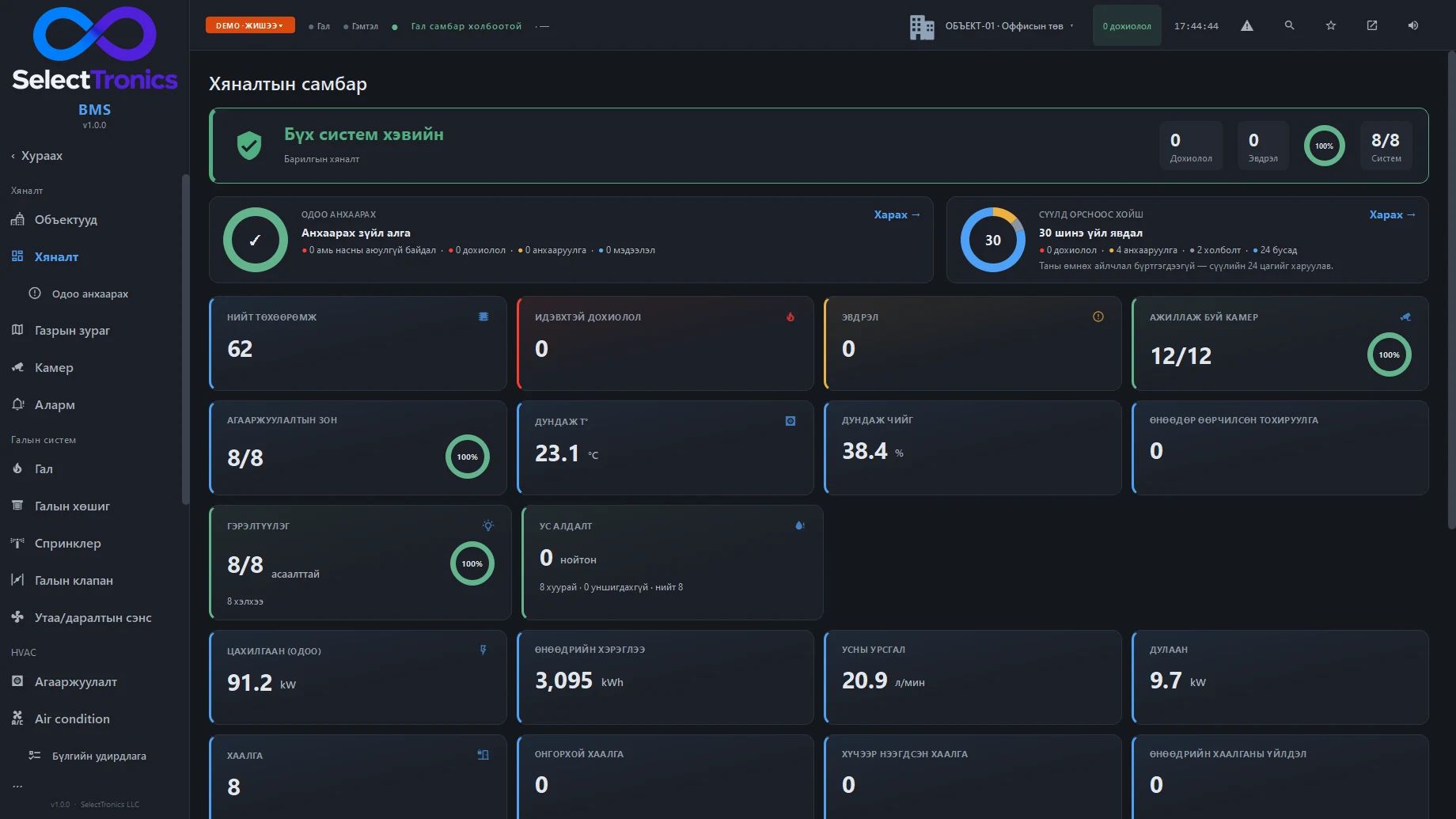
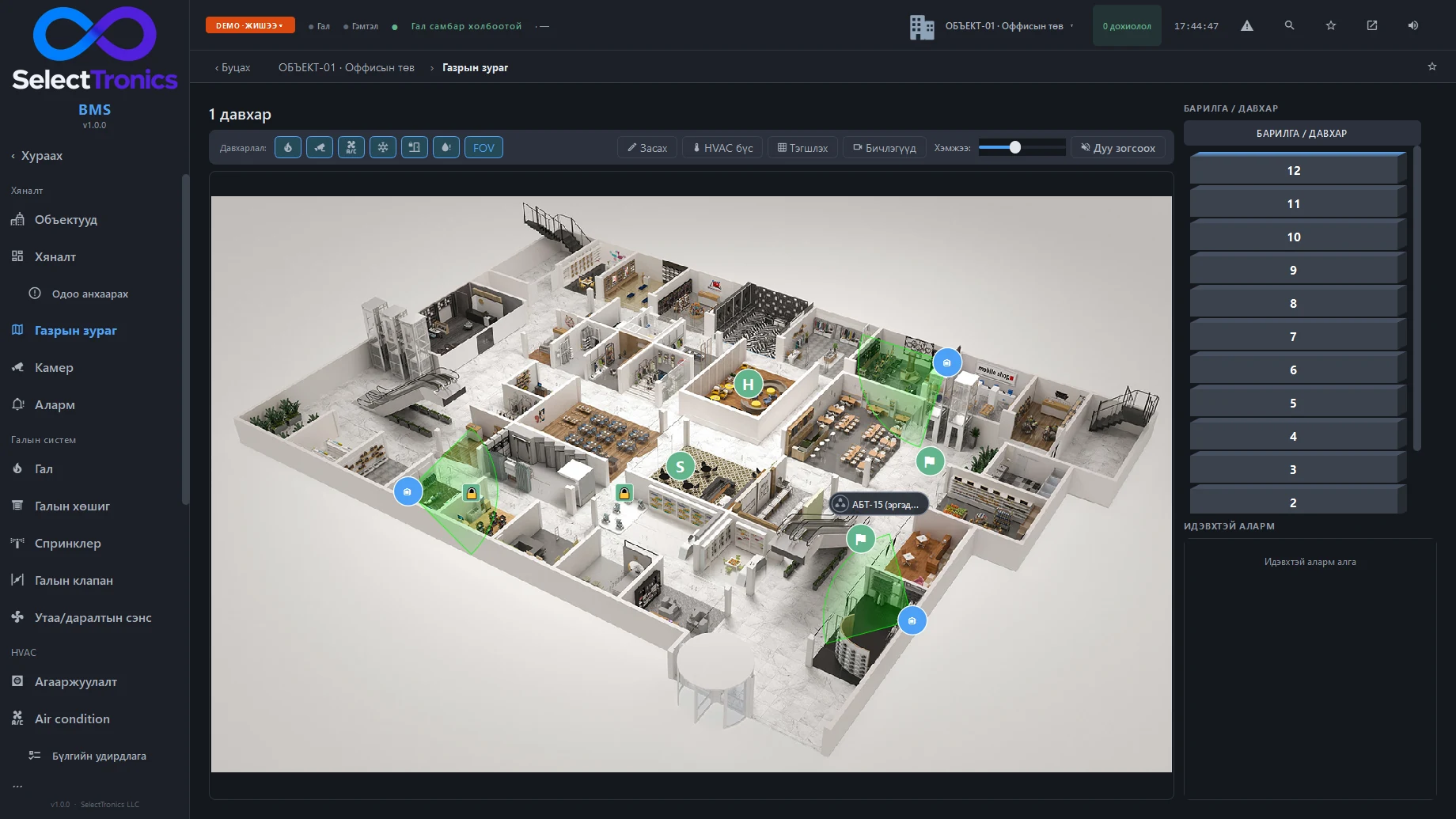
The full edition that brings every building system into one window: live status of each device on floor plans, alarms, history and a video-wall mode.
Capabilities
- Live status of every system on floor plans (Site View)
- Alarm management: priorities, acknowledge, shelve
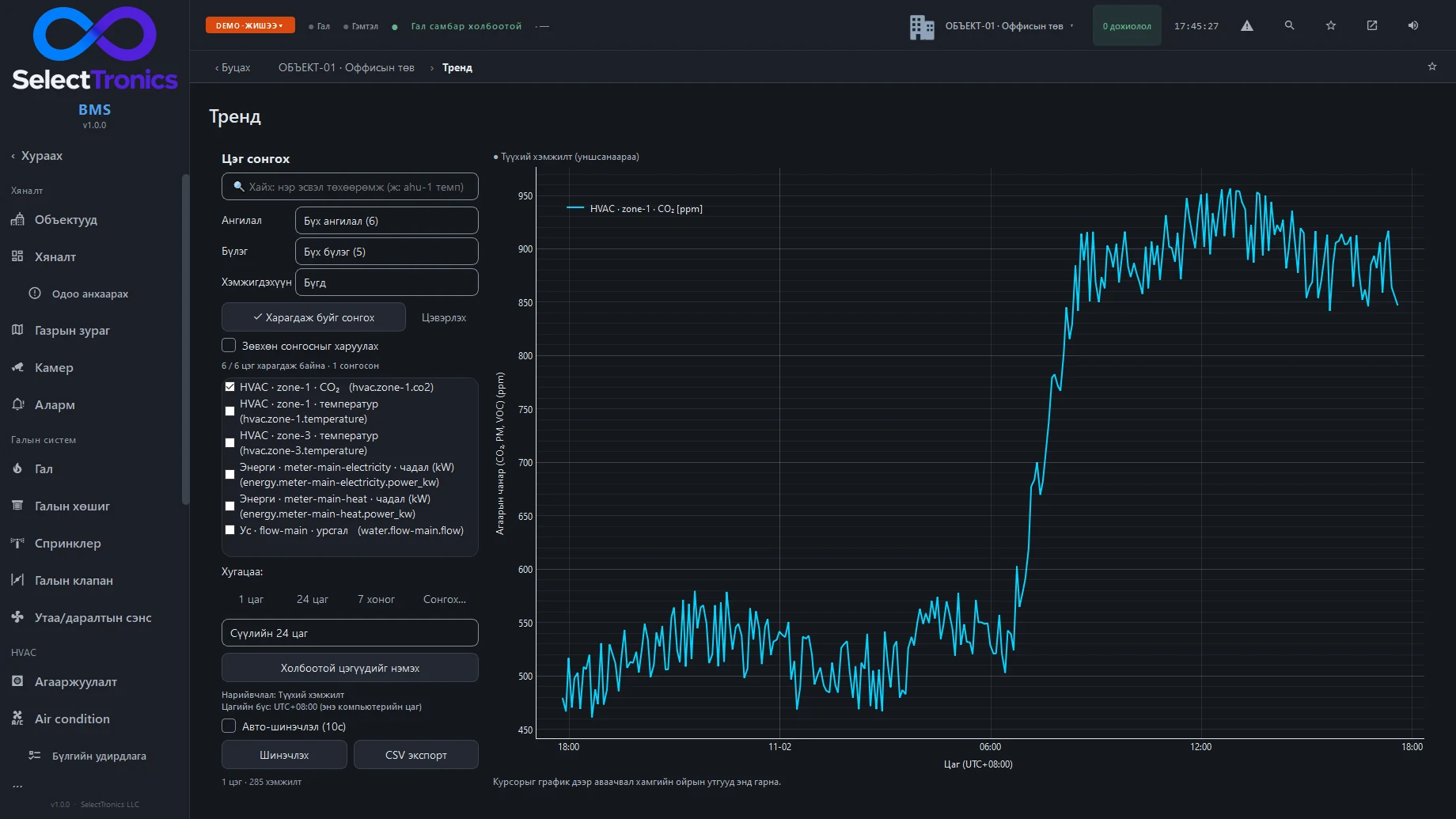
- History, trends, reports and export
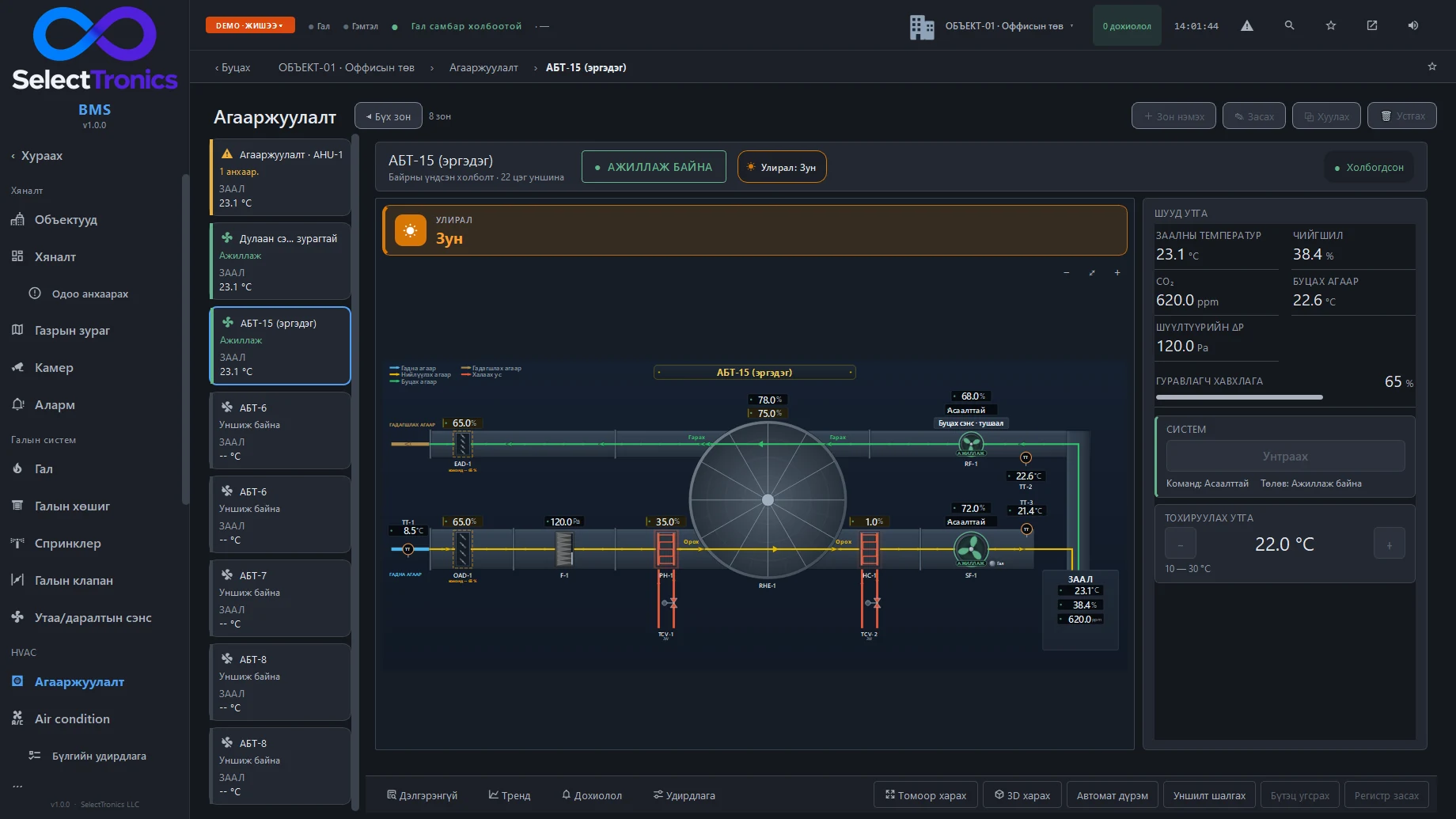
- HVAC/AHU schematics, setpoints and schedules
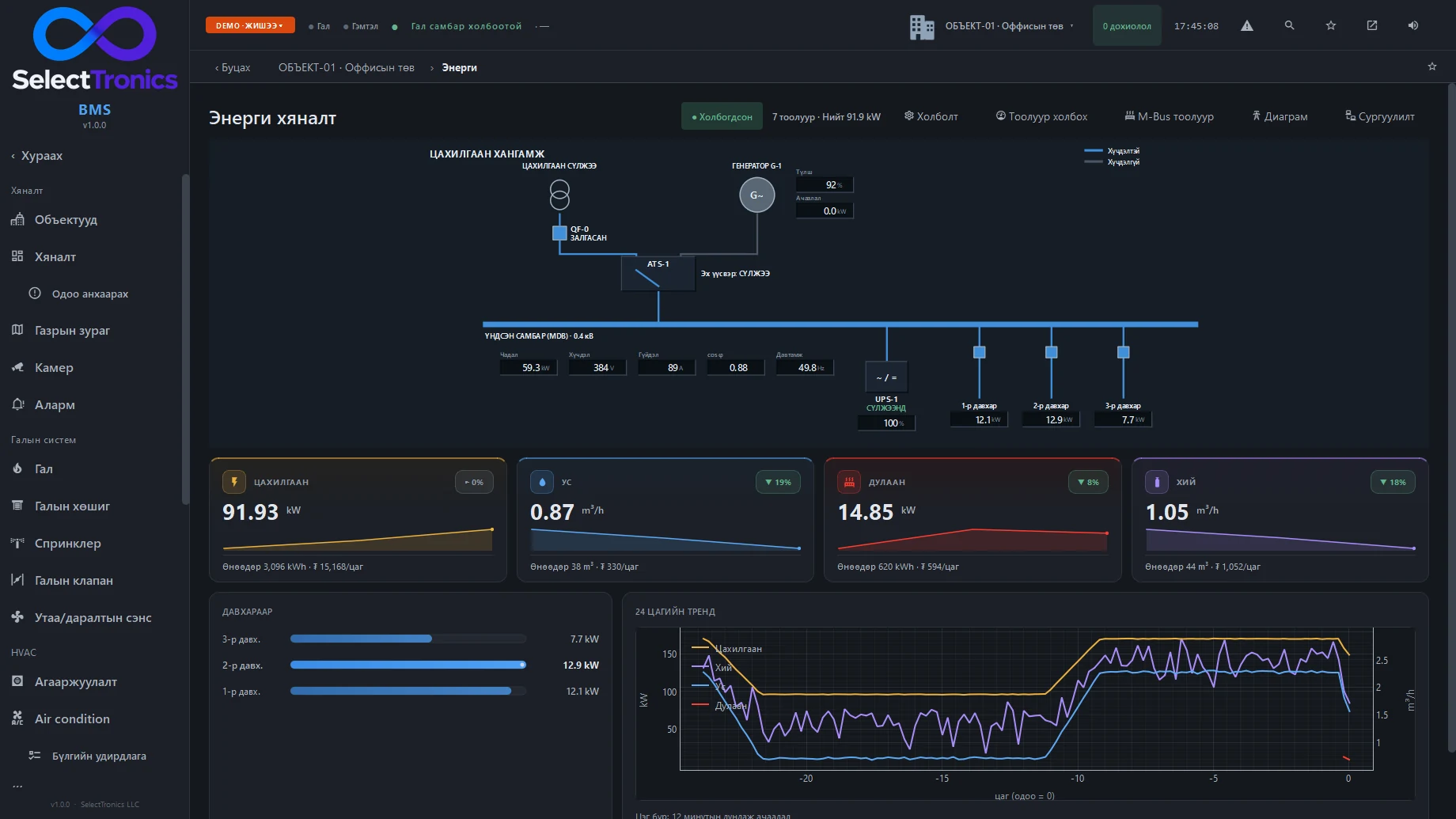
- Energy and water metering (M-Bus, Modbus)
- Video wall: any page on its own screen
- Self-recovery watchdog and updates with rollback
- Role-based access and audit log
What the system does on its own in an emergency
It does not wait for someone to be watching the screen: the moment a sensor trips, the BMS carries out these steps within seconds.
When a fire breaks out
- As soon as a fire panel detector trips, the floor plan pinpoints the exact room and floor and the nearest camera opens automatically.
- Building owners, engineers and security are notified by email, Telegram and SMS. The email carries the camera recording from that moment.
- A public-address announcement is made. If nobody acknowledges, the alert escalates to the next person in line.
- Smoke extraction and pressurisation fans, fire dampers, fire curtains and sprinkler pumps are shown on one screen.
- Dangerous remote commands are blocked by the system during a fire.
- When it started, who acknowledged and what was done are logged with timestamps, as evidence for review and insurance.
When a door is forced open
- The system detects a door opening without a command, or being held open too long.
- It raises an alarm and immediately notifies security and responsible people by email, Telegram and SMS.
- The event is logged with time, door and card details.
Modules
Every module can be bought on its own: just fire and cameras, or just HVAC, and more added later as needs grow. Open protocols (Modbus, BACnet, OPC UA, KNX, M-Bus) connect equipment from any manufacturer, so it fits almost any building. All modules run in one application on one set of data.
Fire panels and every detector on the floor plan.
- Detector location, faults and disconnections
- Nearest camera on alarm
- Dangerous commands blocked during a fire
Smoke extraction and pressurisation fans, fire dampers, fire curtains.
- Status of every fan and damper
- Monitoring of fire-mode operation
- Faulty or unresponsive devices flagged
Sprinkler zones, fire and jockey pumps.
- Pump running and pressure
- Zone valve status
- Pump test history
Multi-stream video wall and cameras on the floor plan.
- Nearest camera opens on alarm
- Recording attached to the fire email
- Hikvision, Uniview, ONVIF
Doors, turnstiles, barriers and lift floor access.
- Card, PIN, QR, plate recognition (ANPR)
- Forced and held-open door alarms
- Full access log
Live schematic of every air handling unit.
- Fans, dampers, heating and cooling coils, heat recovery
- Temperature setpoints and schedules
- Start and stop one by one or all at once
Air conditioners in every office and room.
- Switch on or off individually, by group or all at once
- Mode, fan speed, setpoint
- Schedules that switch off outside working hours
Heat substation and the plate exchanger of each circuit.
- Valves, pumps, leaving temperature
- Auto and manual mode, setpoint
- Night and weekend setback schedules
Chillers and chilled water circuits.
- Operation, temperature, load
- Alarms and fault information
- Running hours
Electricity, water and heat meters.
- M-Bus and Modbus meters
- Consumption trends and comparisons
- Spot where too much is being used
Pumps, tanks, flow and leaks.
- Pump operation and duty rotation
- Tank level and pressure
- Water leak alarms
Position, doors and faults of every lift.
- Floor, direction, door status
- Fault and stoppage alarms
- Floor access linked to access control
Corridors, exterior lighting and zones.
- Schedules, sunset and sunrise
- DALI, KNX, Modbus relays
- Switch by zone
Alarms from every system in one list.
- Email, Telegram, SMS, webhook, public address
- Escalation to the next responsible person
- Prioritise, acknowledge, shelve
History of every reading and every action.
- Trend charts, Excel export
- Who sent which command and when
- Scheduled reports
Running hours and service plans for each machine.
- Plans by running hours or by calendar
- Reminders when work falls due
- Service history
Economic benefit
The saving is not a guess: each mechanism below comes from a measurable cost. The actual figure depends on the building's size, existing equipment and use.
| Source | Saving | Where it comes from |
|---|---|---|
| Air handling schedules | 15–25% | Turned down when empty, started at the optimum time before work |
| Heating schedules | 10–15% | Night and weekend setback based on outdoor temperature |
| Lighting schedules | 20–30% | Exterior lighting, empty corridors, night hours |
| Early fault detection | 5–10% | Stuck valves, clogged filters, short-cycling pumps |
| Metering and trends | 3–8% | Seeing where too much is used changes how the building is run |
| Maintenance by running hours | 10–20% | Of maintenance cost: by actual hours run, not by the calendar |
| Remote monitoring | 30–50% | Of site visits and shift staff hours |
Equipment and building lifespan
Every connected machine (fans, pumps, chillers, air conditioners) counts its running hours. Maintenance is planned by actual hours run rather than the calendar: no money wasted servicing too early, no breakdowns from servicing too late.
Early fault detection fixes small faults before they become major failures. Equipment runs in its normal range without overload, so its service life is extended.
Stable heating, ventilation and water supply reduce damage from damp, freezing and leaks, which is good for the life of the building itself.
Screens
BMS edition comparison
| STX BMS | STX BMS Lite | STX Fire & Camera | |
|---|---|---|---|
| Fire alarm | ✓ | ✕ | ✓ |
| Cameras | ✓ | ✕ | ✓ |
| Access control, doors | ✓ | ✓ | ✓ |
| HVAC | ✓ | ✓ | ✕ |
| Energy and metering | ✓ | ✓ | ✕ |
| Elevators | ✓ | ✓ | ✕ |
| Water and pumps | ✓ | ✓ | ✕ |
| OPC UA server | ✓ | ✓ | ✓ |
All products
HVAC, energy, access, elevators, water and lighting, for buildings whose fire system is separate.
Learn more →Fire alarm, CCTV and doorsSTX Fire & CameraA focused edition that monitors the fire panel, cameras and doors on one screen.
Learn more →Access controlSTX AccessCards, PIN, QR, licence-plate recognition (ANPR), elevator floor rights, one-time guest passes and opening from a phone.
Learn more →Let's find the right setup for your building
Our engineers prepare a presentation and estimate matched to your site, systems and budget.